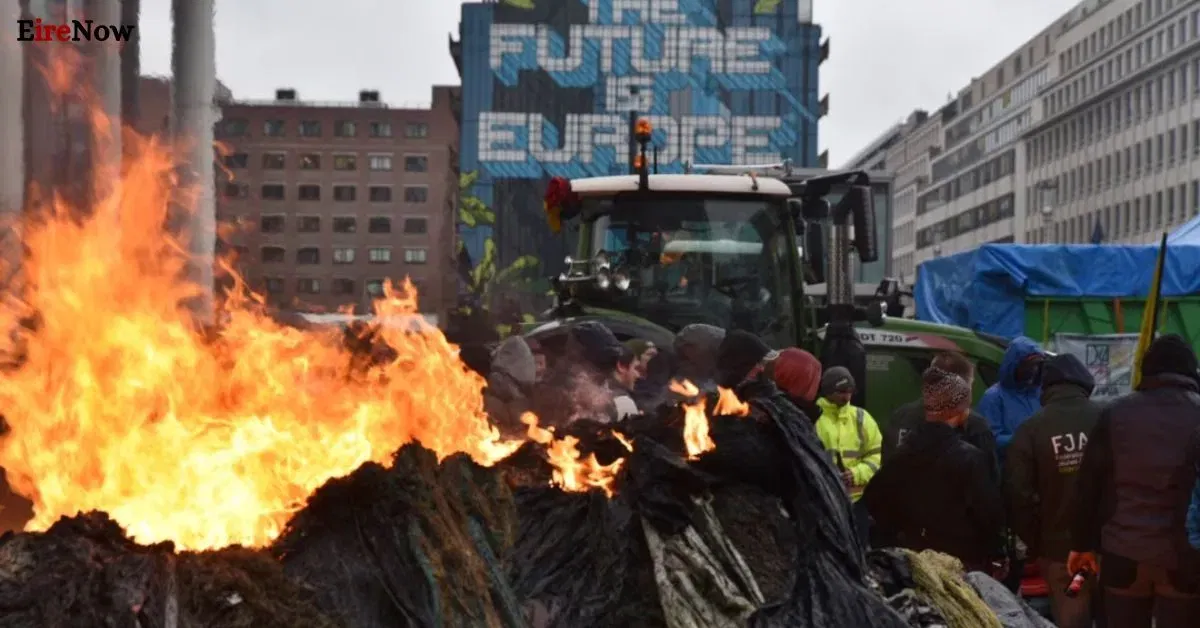
Brussels — Violence erupted in the heart of the European Union’s capital today as thousands of farmers converged to protest the proposed EU-Mercosur free-trade agreement. Approximately 1,000 tractors clogged the streets of Brussels, while riot police used tear gas and water cannons to disperse crowds near the European Parliament.
Clashes and Chaos
The demonstrations, which began as a march of 7,000 farmers, turned chaotic outside the European Parliament. Protesters lit bonfires of tires and hay, threw potatoes and eggs at police lines, and in some instances, smashed windows of parliament buildings. “The dictatorship starts here,” read one sign, reflecting the anger of farmers who feel European Commission President Ursula von der Leyen is forcing the deal through despite heavy opposition.
The Core of the Conflict
Farmers, particularly from France and Belgium, fear the deal will flood the European market with cheaper, less-regulated agricultural products—such as beef, sugar, and soy—from the South American Mercosur bloc (Brazil, Argentina, Paraguay, Uruguay, and Bolivia).
- The Opposition: French President Emmanuel Macron and Italian Prime Minister Giorgia Meloni have called for a delay, demanding “mirror clauses” that force South American producers to meet strict EU environmental and safety standards.
- The Supporters: German Chancellor Friedrich Merz and leaders from Spain and the Nordic countries strongly support the deal, arguing it is vital for EU exports (vehicles, machinery, and wine) amidst rising global trade tensions with the US and China.
What’s Next?
While Chancellor Merz stated that the deal is a test of the “EU’s ability to act,” the growing alliance between Paris, Rome, Warsaw, and Budapest may now have enough strength to block the agreement. Commission President Von der Leyen’s planned trip to Brazil this weekend to sign the deal remains in jeopardy as leaders continue negotiations at the Brussels summit.