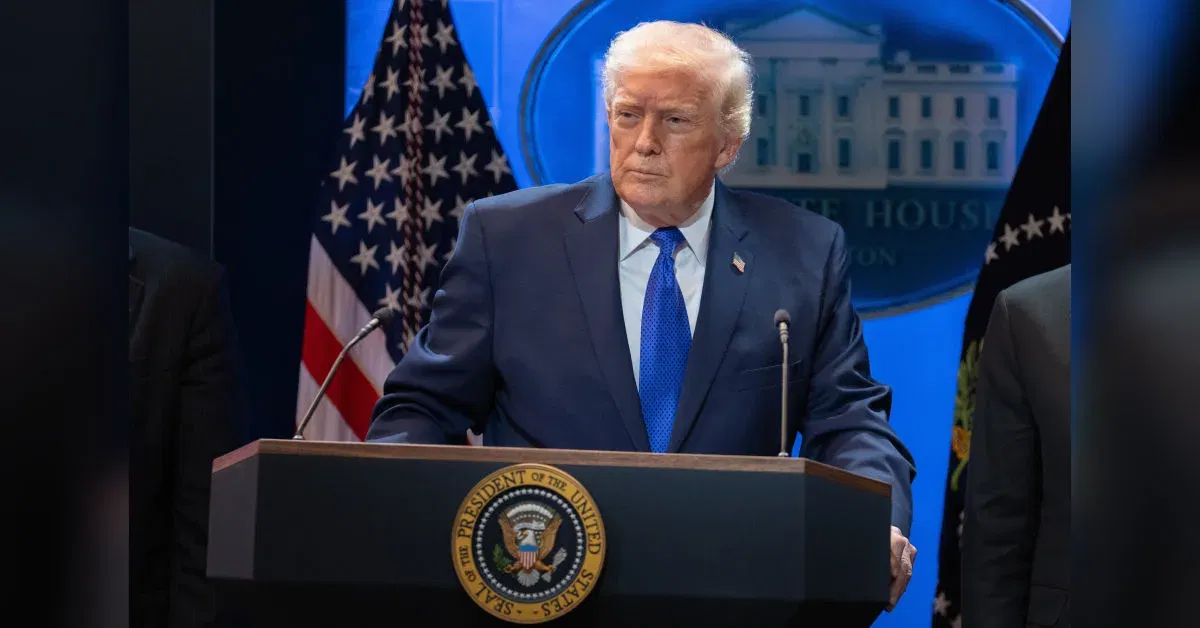
The political landscape in the United States has reached a boiling point this weekend. President Donald Trump has announced a massive 15% global tariff on almost all goods imported into the U.S. This decision came on Saturday, February 21, 2026, just 24 hours after the U.S. Supreme Court struck down his previous trade policies.
The Supreme Court Battle
On Friday, the Supreme Court issued a 6-3 ruling that shocked the White House. The court decided that the President did not have the legal power to impose broad tariffs under a 1977 national emergency law (IEEPA) without getting permission from Congress first. This ruling was a major setback for the administration, as it threatened the billions of dollars already collected from previous tariffs.
Trump’s Defiant Response
President Trump reacted with extreme anger. On his Truth Social platform, he called the judges “fools” and “disloyal.” While he initially suggested a 10% tariff on Friday, he increased it to 15% by Saturday. He is now using a different law—Section 122 of the Trade Act of 1974. This specific law allows a President to set a tax of up to 15% for 150 days to deal with “serious payment problems” in the U.S. economy. By picking the maximum 15% rate, the President is signalling that he will not back down from his trade war, regardless of what the courts say.
Impact on the Global Economy
This 15% tax will affect everything from electronics and cars to clothing and food. Experts warn that this will lead to higher prices for American shoppers and could cause a global trade war. Countries like Germany, France, and the UK have expressed deep concern. German Chancellor Friedrich Merz announced he will travel to Washington in March to discuss the “poison” of this economic uncertainty. However, certain items like pharmaceuticals and some metals may be exempted to prevent a total shortage of essential goods.
A Second Crisis: The Government Shutdown
As if the trade war wasn’t enough, the U.S. is also facing a partial government shutdown. Because Congress and the White House cannot agree on a budget for the Department of Homeland Security (DHS), funding has run out for several key agencies.
The most immediate impact for travellers is the suspension of TSA PreCheck and Global Entry. Starting Sunday morning, millions of travellers who paid for these “fast-pass” security services will have to stand in standard, long security lines. DHS Secretary Kristi Noem stated that the department is prioritizing general safety over “special privileges” during the shutdown. This is expected to cause massive delays at major airports like O’Hare in Chicago and JFK in New York.+1
Why is the Government Shut?
The shutdown started because of a fight over immigration and police reform. Democrats are refusing to fund the DHS until new rules are put in place following the deaths of two citizens, Alex Pretti and Renee Good, who were killed by federal officers in Minneapolis earlier this year. With neither side willing to budge, the shutdown is entering its second week with no end in sight.
What Happens Next?
Next week, President Trump is scheduled to give his State of the Union address. Many expect him to use this speech to double down on his 15% tariff plan and criticize his political opponents and the Supreme Court. For now, the world waits to see if Congress will step in or if the U.S. economy is headed for a period of extreme volatility.