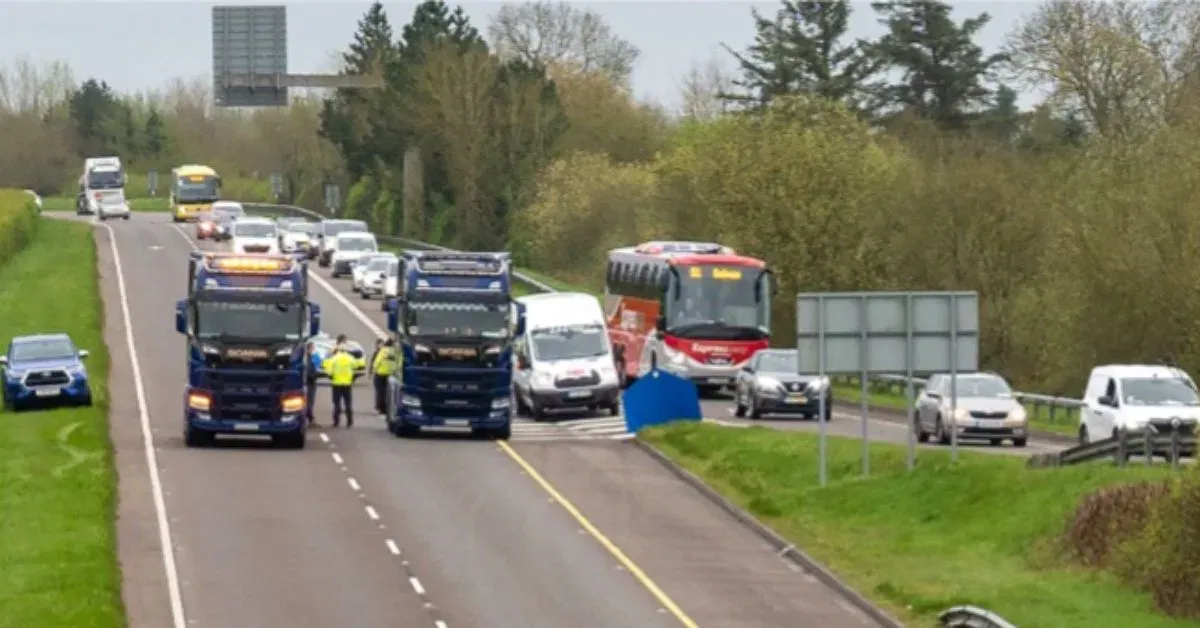
The announcement of a 14-day conditional ceasefire between the United States and Iran has sent a wave of relief through global energy markets, yet the Irish economy remains caught between international hope and domestic frustration. As oil and gas prices saw their sharpest decline in months on Wednesday and Thursday morning, the streets of Dublin and other major Irish cities continued to face unprecedented disruption from hauliers and farmers protesting high fuel costs.
Global Markets Respond
The “14-day pause” announced by President Donald Trump has had an immediate impact on the cost of energy. In London, Brent Crude futures fell significantly, briefly trading below the $100 mark for the first time since the escalation in early March. European natural gas prices also plummeted by over 15% at the market opening, reflecting a collective sigh of relief that the immediate threat to the world’s energy supply—the Strait of Hormuz—might soon be lifted.
For Irish businesses, particularly those in manufacturing and construction, this drop is a lifeline. Industry experts note that the surcharges of up to 30% imposed by steel and chemical manufacturers in recent weeks may now be re-evaluated if the ceasefire holds.
The Domestic Crisis: Gridlock in Dublin
However, the global de-escalation has not yet cooled the tempers of domestic protesters. For a third successive day, convoys of trucks and tractors have clogged the M50 and central Dublin, specifically O’Connell Street. The protesters, who represent independent hauliers and agricultural contractors, argue that the government’s €250 million tax-cut package is insufficient to save their businesses from folding.
“We are two months away from bankruptcy,” said one contractor at the Dublin blockade. The protesters are demanding a cap on diesel prices at the pump, despite the government’s insistence that it will not meet with groups that do not represent official industry bodies.
Government and Institutional Stance
The Irish government has formally welcomed the ceasefire, with the Minister for Finance stating that the truce should lead to a “tangible fall in forecourt prices within days.” The government remains optimistic that the 14-day window will allow for a permanent diplomatic solution in Islamabad, which would stabilize the euro and lower the cost of living for Irish households.
However, Taoiseach Micheál Martin and his cabinet have maintained a firm line against the protesters, refusing to engage in talks while the city remains in a state of “unnecessary gridlock.” They argue that the global drop in oil prices is the “only sustainable way” to bring costs down, and that domestic subsidies cannot replace international peace.
A Fragile Outlook
While the travel and aviation sectors, led by voices like IATA’s Willie Walsh, have welcomed the news, they warn that it will take months for jet fuel supplies and ticket prices to normalize. The damage to regional refineries in the Middle East is extensive, and the “14-day clock” is ticking loudly.
As Ireland enters the weekend, the economic focus is split: can the diplomatic talks in Islamabad secure the long-term flow of oil, and will the domestic protesters clear the streets in time for the anticipated drop in pump prices? For now, the “wait and see” approach dominates the Irish boardrooms.