Ireland has marked the opening working week of its EU Council Presidency with the launch of a new €2 commemorative coin, a lasting symbol of the country’s six-month term at the helm of the European Union.
Tánaiste and Minister for Finance Simon Harris formally unveiled the coin this morning alongside Central Bank Governor Gabriel Makhlouf at the bank’s Dublin headquarters. Mr Harris described the coin as marking an important milestone for Ireland’s presidency of the Council of the European Union, calling it a lasting reminder of the country’s role at the heart of Europe. He noted that long after the presidency concludes, the coin will continue to circulate across the continent, serving as a reminder of Ireland’s contribution and the work carried out during its term.
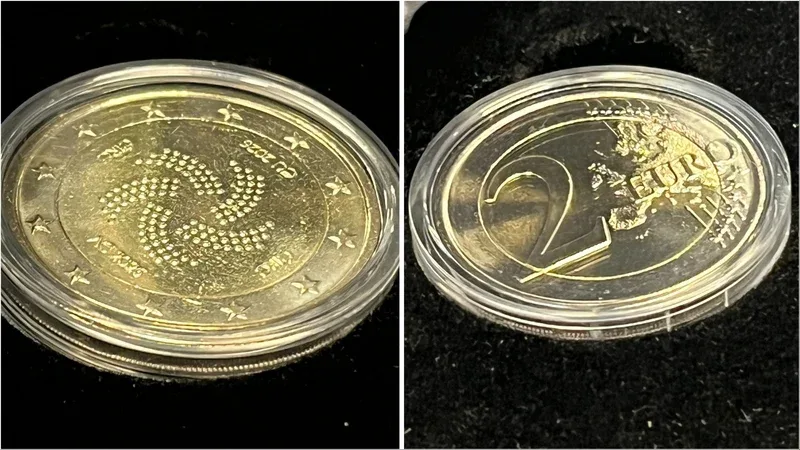
The coin’s design features the Irish Presidency logo, intended to symbolise growth, dynamism and movement. It incorporates five spirals made up of 27 dots — one for each EU member state — which together outline a star, echoing the stars on the European flag. The Central Bank will mint 500,000 of the special coins, entering general circulation from tomorrow. People across Ireland and Europe will find them in their pockets in the weeks ahead, and a proof set will go on sale via collectorcoins.ie from mid-July.
The launch coincides with a packed diplomatic calendar. A two-day gathering of EU social protection ministers, involving Minister Dara Calleary and his counterparts, concludes today in Co Mayo, while a meeting of EU finance ministers takes place in Brussels later this week under the Tánaiste’s chairmanship. Taoiseach Micheál Martin will address the European Parliament in Strasbourg tomorrow, setting out Ireland’s presidential priorities.
Ireland holds the rotating Council Presidency, a role that steers legislative negotiations and sets agendas among the 27 member states, for the first time since 2013. For the wider community here — including Ireland’s growing Indian diaspora — the presidency places the country at the centre of European decision-making on issues ranging from migration to trade during a period of significant change across the bloc.