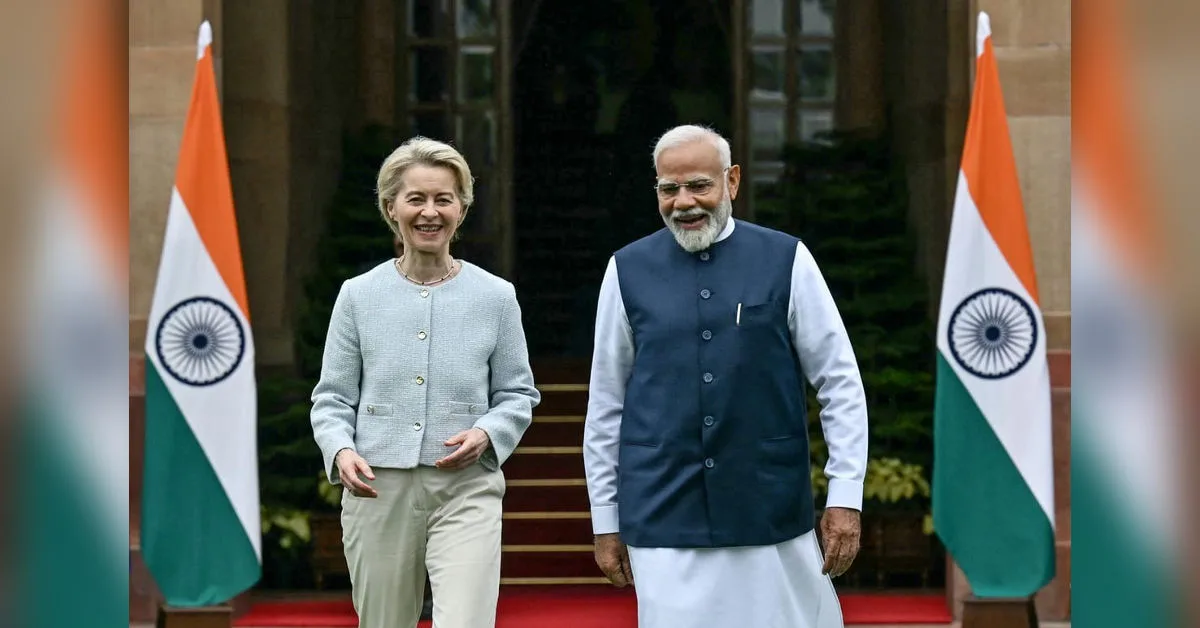
After nearly two decades of difficult negotiations, India and the European Union (EU) have finally signed a massive Free Trade Agreement (FTA). The deal, described by EU Commission President Ursula von der Leyen as the “mother of all deals,” creates a free trade zone covering 2 billion people and is expected to double trade between the two giants by 2032.
A Long Time Coming
The journey to this agreement began in 2007. For 19 years, the talks stopped and started as both sides struggled to agree on sensitive issues like agriculture and labour laws. However, recent global tensions and the need to find new, reliable business partners pushed the leaders to finalize the pact. Prime Minister Narendra Modi welcomed the deal, stating it adds a “decisive chapter” to the relationship between the world’s two largest democracies.
What Changes for Consumers and Businesses?
The agreement will eliminate or sharply reduce taxes (tariffs) on over 90% of goods traded between India and the EU. This will have a direct impact on several key industries:
- For India: Indian exporters of textiles, leather, footwear, and jewelry will now have duty-free access to the European market. This is expected to create millions of jobs in India’s labor-intensive sectors. Additionally, the deal makes it easier for Indian IT professionals, engineers, and consultants to work on short-term projects in Europe.
- For the EU: European companies will save billions in taxes. Most notably, India’s high tax on imported cars will drop from 110% to just 10% over the next five years. Similarly, taxes on European wines and spirits, which were as high as 150%, will be slashed to 20-30%, making luxury European goods much more affordable in India.
- Machinery and Chemicals: Taxes on industrial machinery, chemicals, and pharmaceuticals will be almost entirely removed, helping both regions grow their manufacturing bases.
Protecting the Farmers
Despite the broad opening of markets, some areas remain protected. To safeguard local farmers, the EU will keep its tariffs on sensitive products like beef, sugar, rice, and milk powder. Similarly, India has kept some protections for its small-scale farmers to ensure their livelihoods are not threatened by a sudden flood of imports.
Green and Fair Trade
A unique part of this 2026 deal is the focus on “Sustainability.” For the first time, India and the EU have agreed on legally binding rules regarding climate protection and workers’ rights. The EU will provide €500 million in support over the next two years to help India transition to greener manufacturing. This ensures that the increase in trade does not come at the cost of the environment.
The Bigger Picture
Geopolitically, this deal is a message to the rest of the world. With uncertainty in US trade policies and a desire to reduce dependence on China, the EU and India are choosing to rely on each other. President von der Leyen noted, “When India succeeds, the world is more stable, prosperous, and secure.”