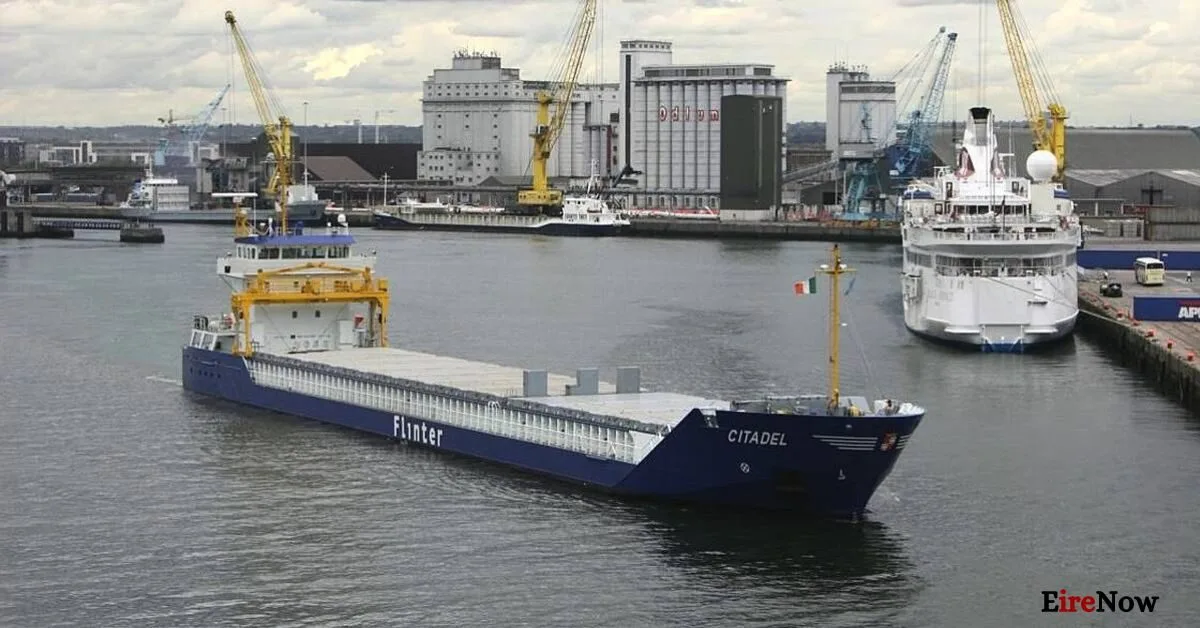
DUBLIN — The Irish Road Hauliers Association (IRHA) has warned that new charges introduced by the Dublin Port Company could significantly increase the cost of essential goods, including food, fuel, and construction materials, potentially leading to higher supermarket prices.
The new tariffs, which are set to take effect from 2026, include a five per cent increase in the price of a container and an additional €15 infrastructure charge. In total, the Dublin Port Company (DPC) confirmed that the overall cost per container will rise by €16.83, or 46 per cent, bringing the new total to €53.33.
The Central Statistics Office (CSO) estimates that the average shipping container passing through the port contains about €100,000 worth of goods.
IRHA Slams Move as ‘Self-Sabotage’
Ger Hyland, President of the IRHA, strongly criticized the decision, calling it an “act of self-sabotage on Irish trade interests.” He drew a comparison to international trade disputes, noting, “We fought hard with Trump and America to stop 15 per cent tariffs coming on Irish goods. And here we have Dublin Port introducing tariffs on top of the country as well.”
Dublin Port is a critical hub for the Irish economy, facilitating up to €165 billion in trade each year and handling 80 per cent of all containerised freight entering Ireland.
Dublin Port Defends the Increase
The Dublin Port Company stated that the increased charges are necessary following the finalisation of its pricing framework for 2026–2030, which is part of the next phase of its Masterplan 2040.
A spokesperson for the DPC explained that the need for the increase is due to the “dual impact of construction inflation combined with the commencement of the second project of Masterplan 2040.” The port’s average annual capital investment is set to dramatically increase from €65 million (2015–2024) to €170 million between 2025 and 2030.
The spokesperson emphasized that this “Continued investment at this scale is essential to maintain capacity and resilience” and ensure the port can continue to support Ireland’s economic growth. While acknowledging the challenges for customers, the DPC stated the changes are “not expected to have an inflationary impact” on consumer prices.