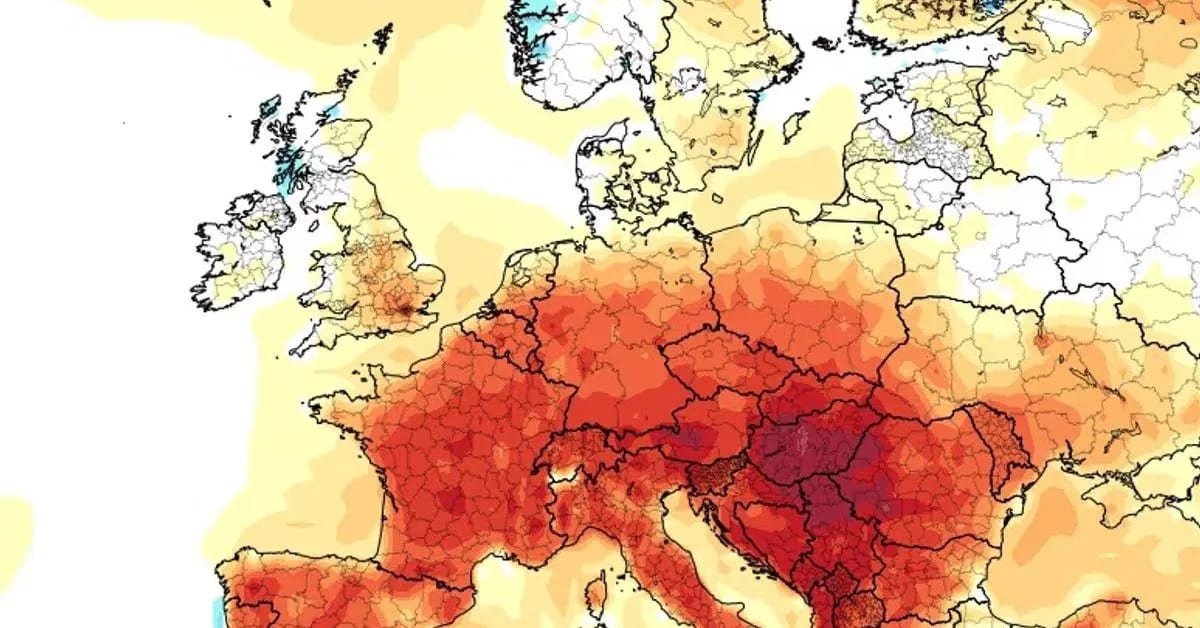
The climate crisis is no longer a distant threat but a present, punishing reality for Europe. According to the latest “State of the European Climate” report published today by the Copernicus Climate Change Service and the WMO, Europe is warming at twice the speed of the global average. With 2025 breaking almost every major climate record, scientists warn that the continent is at a tipping point.
The statistics are staggering. At least 95% of the European landmass experienced temperatures above the 1991–2020 average last year. While the global average temperature rise is concerning, Europe’s rise over the last 30 years has been roughly 0.56°C per decade. In July 2025, the Sub-Arctic region of Fennoscandia—Norway, Sweden, and Finland—endured its longest heatwave ever recorded, with temperatures inside the Arctic Circle exceeding 30°C for three weeks straight.
The report highlights a devastating year for the continent’s “frozen assets.” Every single glacier region in Europe saw a net loss of ice. Iceland recorded its second-largest glacier mass loss in history, while the Greenland Ice Sheet shed a staggering 139 billion tonnes of ice—a volume equivalent to 1.5 times the total ice stored in the entire European Alps.
The oceans provided no relief. For the fourth consecutive year, sea surface temperatures reached record highs. Marine heatwaves, categorized as “strong” or “extreme,” struck 86% of European waters, disrupting fishing industries and threatening fragile marine biodiversity. On land, the lack of snow and precipitation led to 70% of Europe’s rivers seeing below-average flows, affecting transport, agriculture, and power generation.
The combination of extreme heat and low soil moisture turned large swathes of Europe into a tinderbox. In 2025, wildfires destroyed over 1 million hectares of land—an area larger than the country of Cyprus. Spain, Germany, and the Netherlands recorded their highest wildfire emissions on record, as smoke from Mediterranean blazes reached as far north as Scandinavia. By May 2025, more than half of the continent (53%) was in a state of official drought.
While the report focuses on meteorological data, the human impact is clear. “Europe is the fastest-warming continent, and the impacts are already severe,” said Florian Pappenberger, Director-General of the ECMWF. Recent health studies released alongside this report suggest that the window for adaptation is narrowing. Heat stress is becoming a leading cause of death, particularly among the elderly and outdoor workers, while the geographical range of climate-sensitive diseases like Dengue is expanding northward.
The silver lining in the report is the continued growth of renewable energy. For the third year running, solar and wind power outpaced fossil fuels in Europe’s energy mix. However, experts argue that the pace of infrastructure adaptation must match the speed of the warming. The albedo effect—where white ice reflects heat away from Earth—is weakening as glaciers vanish, creating a dangerous feedback loop that accelerates further warming.
As Europe concludes its warmest three-year cycle on record, the message from Copernicus and the WMO is unequivocal: current policies are not keeping pace with the thermometer. Without a drastic reduction in fossil fuel dependence, the “present reality” of 2025 will become the “cool average” of the 2030s.