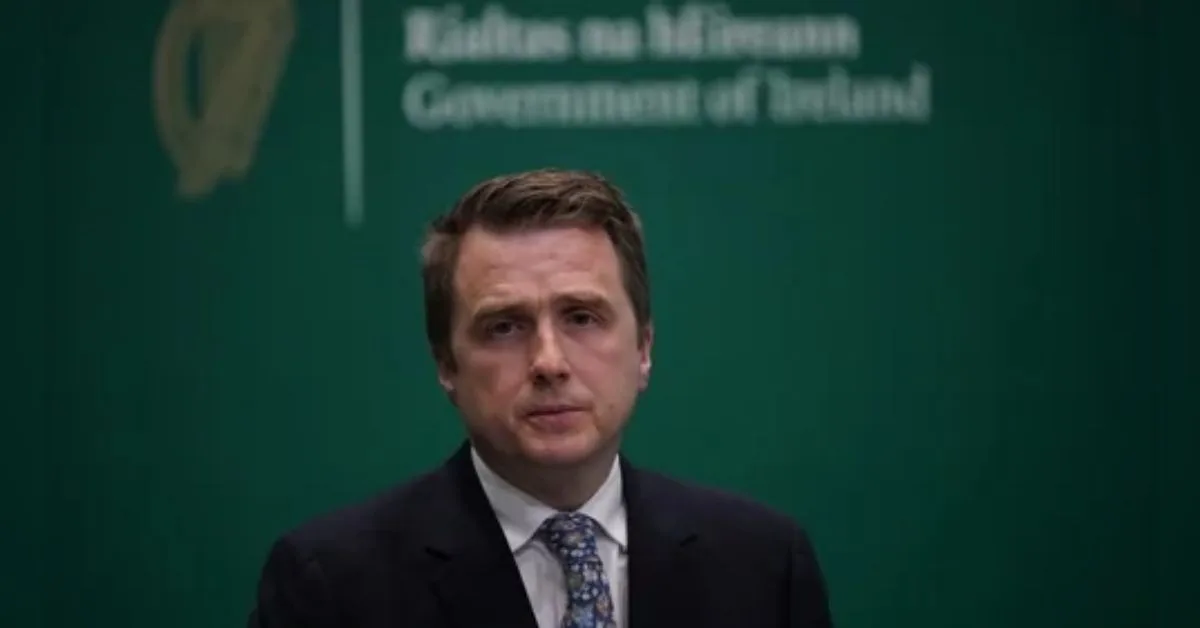
Housing Minister James Browne has told developers there will be no extension to the waiver on water connection charges and development levies, putting pressure on builders to finish new homes by the end of this year.
Speaking to RTÉ News, the Fianna Fáil TD said the waiver has helped to speed up developments, but there is “no possibility” it will be extended into 2027. His comments repeat earlier statements from the Department of Housing. They are also seen as an attempt to push developers to speed up construction over the final two months of the year, a move that would raise the official annual housing completion figure, which is highly politicised.
Under the temporary scheme, developers do not have to pay water connection charges or the local authority development levy on new homes if the homes are finished by the end of 2026. The State pays these costs instead. The scheme was designed to encourage builders to speed up construction in order to benefit from the financial support.
Official guidance sets out the rules. The waiver applies to permitted residential developments that started on site between April 25, 2023 and December 31, 2024. They must be completed by December 31, 2026. If works have not been completed by then, the local authority will send the developer an invoice for the development contributions due, so that the money is refunded to the Department of Housing. The water connection refund arrangement ended earlier, for homes started after September 30, 2024.
The amounts at stake are significant. In 2024, one industry analysis found the average development levy for a 200 square metre house was €6,805, ranging from €1,080 in Co Monaghan to more than €30,000 in parts of Dún Laoghaire-Rathdown. Water and wastewater connection charges total around €6,000.
The Central Statistics Office (CSO) reported on Thursday that 10,154 new homes were completed in July, August and September, up 10.4% on the same period last year. In the first nine months of 2026, 26,833 homes were finished, compared with 24,256 in the same period of 2025, an increase of 10.6%. Over the last 12 months, 38,589 homes have been built.
Within the third quarter, apartment completions rose 9.8% to 3,464, and homes in housing schemes rose 13.5% to 5,163. Single dwellings rose 2.1% to 1,527. Dublin accounted for 37% of all completions, and two-thirds of all apartments completed in the quarter were in the capital. The west saw the largest increase, at 33%, while the Mid-West fell 8% and the Border region fell 6%. The CSO counts completions by new connections to the electricity grid.
Mr Browne said the nine-month figure is the highest since the CSO began counting, and a sign that policies like the levy waiver are working. Deloitte Ireland’s chief economist, Kate English, said Ireland is on track for its highest annual number of completions since 2008.
The Government no longer publishes annual housing targets after a series of misses, but has suggested Ireland is on course for 40,000 new homes this year. The Central Bank projects 39,500 completions in 2026, 41,000 in 2027 and 45,000 in 2028.
Opposition parties say that is not enough. Labour, Sinn Féin and the Social Democrats point out that about 50,000 homes a year are needed between now and 2030 to meet the Government’s medium-term targets. Sinn Féin housing spokesman Eoin Ó Broin said the Government is “on course to miss both its 2026 and 2030 housing targets,” and warned that every year the average is missed, the average needed in later years rises. The independent Housing Commission has backed the 50,000 target, saying 250,000 to 300,000 homes will be needed by the end of the decade.