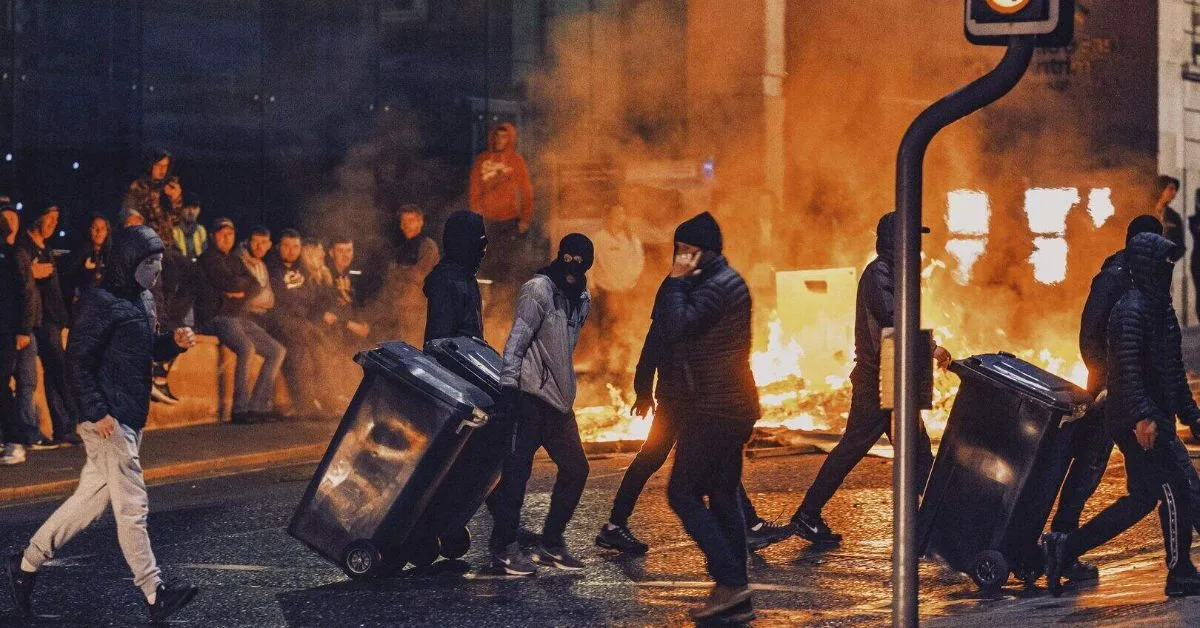
Anxieties surrounding anti-immigrant sentiment have reached a level where some migrant families in Northern Ireland are actively stockpiling food and essential groceries inside their homes to avoid going out in public. Community advocates and frontline support organizations warn that a lingering climate of fear, heavily influenced by the severe public disorder that shook Ballymena last year, is forcing minority households into defensive isolation.
Data compiled by regional integration support networks highlights a deeply concerning trend where everyday tasks—such as visiting local supermarkets, utilizing public transport, or letting children play in neighborhood parks—are increasingly viewed as safety risks. This cautious retreat reflects a collective vulnerability among families terrified of becoming the targets of opportunistic verbal abuse or physical hostility.
Community leaders point out that this current wave of anxiety is not abstract; it is directly rooted in the violent unrest that erupted in Ballymena during the summer of 2025. The intense rioting saw properties vandalized, local businesses targeted, and several migrant families forced to flee their homes in fear for their lives.
While the physical damage in Ballymena was eventually cleared, the psychological scars within Northern Ireland’s minority communities remain wide open. For many immigrant families, the memory of that mob rule has completely changed their relationship with public spaces. Social workers report that buying food in bulk has emerged as a practical coping mechanism, allowing households to dramatically reduce their exposure to the streets during periods of local tension or when anti-immigration rhetoric spikes online.
The practice of retreating behind closed doors highlight a profound challenge for local authorities working to restore confidence. While the Police Service of Northern Ireland (PSNI) has increased patrols and repeatedly condemned racially motivated crime, many vulnerable residents remain deeply hesitant to seek official help.
Advocates explain that victims of low-level street harassment often decline to report incidents due to language barriers, unfamiliarity with the legal framework, or a general belief that minor verbal altercations will not be prioritized. For families with young children, the primary focus has simply shifted to basic survival and avoiding conflict, meaning they would rather stay inside after dark than risk an encounter on the street.
To break this cycle of fear, integration networks are calling for more visible, sustained neighborhood policing across Northern Ireland. Advocates argue that building direct, trust-based relationships between local police units and minority neighborhoods is the only way to ensure that families feel secure enough to reclaim their daily lives without fear of targeted hostility.