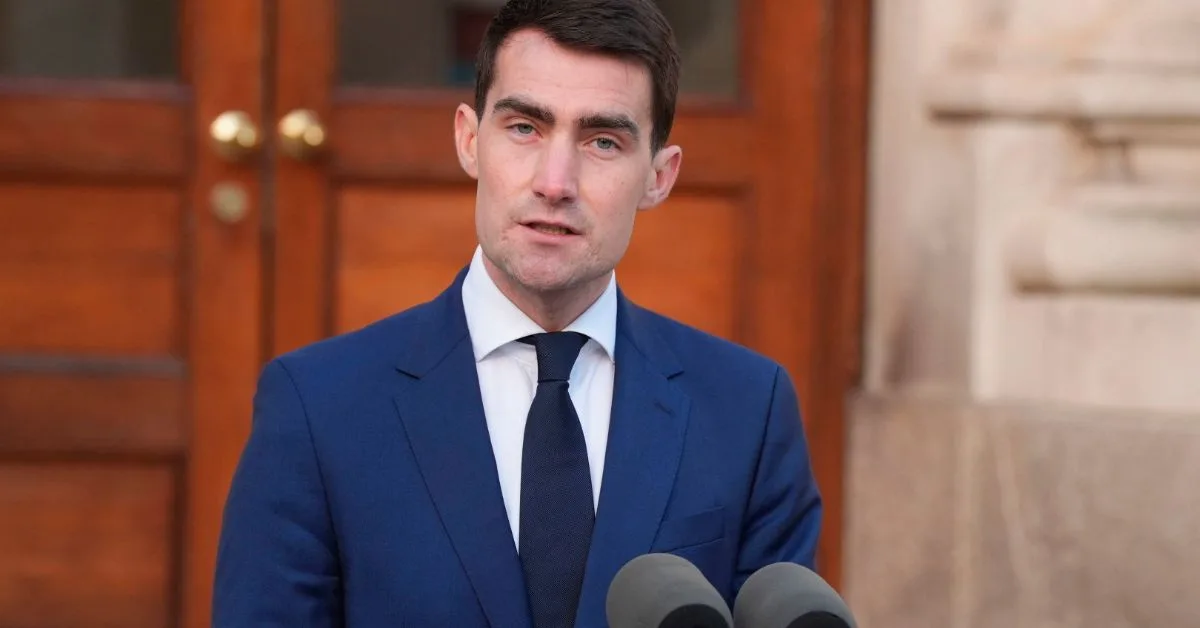
Trade unions have turned down a last-minute Government invitation to formal pay talks, confirming that a national public sector strike will go ahead on Wednesday.
Public Expenditure Minister Jack Chambers wrote to unions on Monday, inviting them to talks at the Workplace Relations Commission (WRC) on Tuesday and calling on them to postpone the strike. He described the strike as “unnecessary” and warned it would cause “great disruption” to the country, particularly to vulnerable people, as well as an “avoidable loss of earnings for public servants.”
In his letter, Mr Chambers said pay “can and should be discussed as a priority,” but “alongside other matters.” He also pointed to the €1.2 billion set aside for public service pay in last week’s Budget.
The Public Services Committee of the Irish Congress of Trade Unions (ICTU) rejected the offer. In a joint response, chair Kevin Callinan and officers Phil Ní Sheaghdha, John Boyle and Adrian Kane said the letter did not represent any change in the Government’s position. They said there was “no basis” to postpone the strike, and that preparations would continue. The unions said the Government “must acknowledge that the specific pay issues raised by unions will be addressed in any talks at the outset.”
The dispute comes down to the order of discussion. Unions want talks to begin with pay and the cost of living. The Government says it will not agree to preconditions, and wants to follow the usual format of discussing reform and fiscal parameters before turning to pay and inflation.
Unions argue the pay issue is real. They say the average public servant’s pay fell about 5% behind inflation between 2021 and 2025, because earlier agreements did not reflect the sharp rise in prices. The Public Service Agreement 2024–2026 expired in June, and no replacement has been agreed. Fórsa has said talks so far have not produced a credible approach to pay.
Unions estimate that between 300,000 and 400,000 public servants will take part. About 385,000 workers were covered by the expired agreement, though not all are legally entitled to strike. Fórsa, Ireland’s largest public sector union, has described it as the biggest public sector strike since the height of the financial crisis in 2009.
Widespread disruption is expected. Schools are due to close, hospitals and other public services will be affected, and the Dáil schedule is expected to be disrupted. Health unions representing therapists, nurses, midwives, doctors and social workers are joining the action, alongside the major teachers’ unions. More than 23,000 members of the Teachers’ Union of Ireland have already begun industrial action. Unions have also said that working from home while colleagues are on strike is the same as crossing a picket line.
Essential services will be maintained on the day. A second one-day stoppage is planned for Wednesday, October 21, and senior union figures have privately warned that action could escalate in November if there is no progress.
Government sources said earlier this week that a separate €1.6 billion contingency fund could be used in part for a deal, while some unions have said more than €2 billion will be needed. With neither side shifting on how talks should begin, parents, patients and commuters are being urged to prepare for a day of significant disruption.