In a historic milestone for global diplomacy, the European Union has formally invited Canada to become the bloc’s first-ever “associate member,” signaling an unprecedented deepening of ties between Europe and North America.
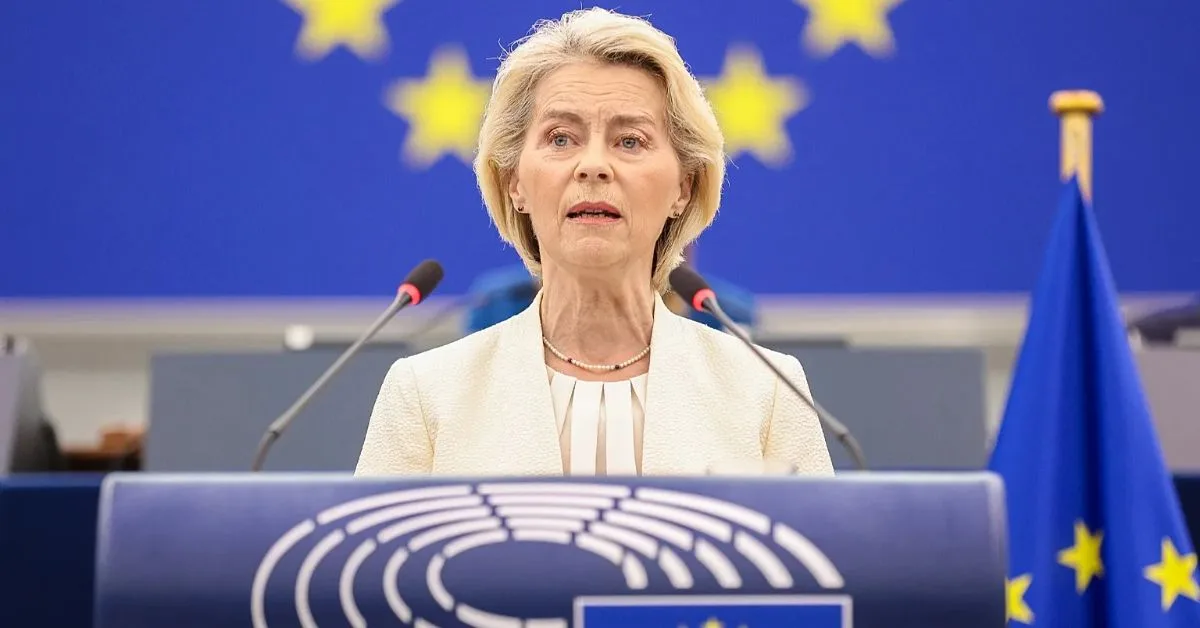
European Commission President Ursula von der Leyen unveiled the proposal during her annual State of the European Union address in Strasbourg. Calling for a transition from traditional trade deals to a broader “Alliance for the Future,” von der Leyen stated that the initiative aims to create a shared space for mutual prosperity, supply-chain resilience, and collective economic security.
A Geopolitical Pivot Away from US Trade Strain
The proposal comes as Canadian Prime Minister Mark Carney actively seeks to diversify Ottawa’s economic and security alliances. With trade tensions and tariffs creating friction in North America, Canada has turned toward European partners to anchor its long-term economic stability.
While EU treaties strictly limit full membership to sovereign states located physically within Europe, the new “associate member” designation creates a tailored framework for non-European democracies. Under the envisioned arrangement, Canada and the EU would integrate strategic sectors without Ottawa taking on full EU single market rights or political obligations.
Deepening Defense, Energy, and Tech Ties
The associate membership framework seeks to expand existing bilateral cooperation beyond the Comprehensive Economic and Trade Agreement (CETA). Key pillars under negotiation include:
- Defense Cooperation: Building on Canada’s entry into the EU’s €150 billion SAFE defence loan facility, allowing Canadian defense manufacturers to bid on joint European procurement projects.
- Energy and Critical Minerals: Securing direct supply chains for Canadian liquefied natural gas, hydrogen, and critical minerals essential for European high-tech and green industries.
- Research and Mobility: Expanding research partnerships under Horizon Europe and exploring simplified visa frameworks to facilitate workforce and student mobility.
Path Forward
Prime Minister Carney is set to address the European Parliament in Strasbourg to outline Ottawa’s vision for the partnership. While the exact legal mechanisms of “associate membership” will require formal approval from all 27 EU member states, both European and Canadian leaders agree that the initiative marks a fundamental realignment in transatlantic relations.