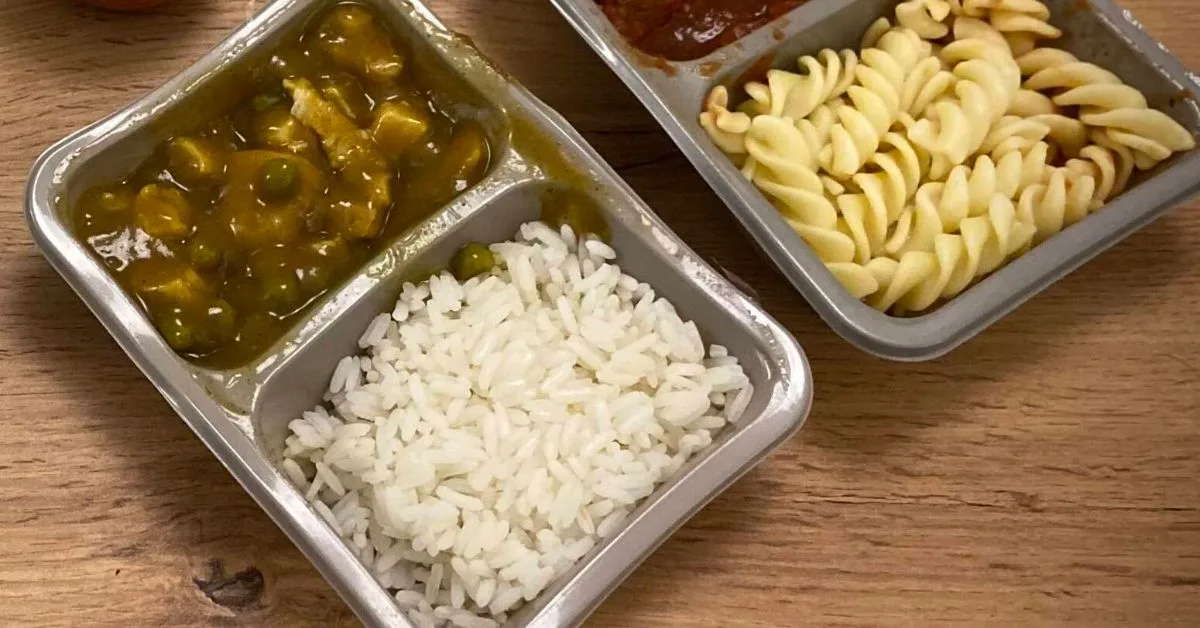
The Government is set to overhaul Ireland’s free hot school meals programme after two independent reviews uncovered significant shortcomings, including the finding that roughly a fifth of all meals delivered to schools each day go uneaten.
Social Protection Minister Dara Calleary is bringing the findings of the two Government-commissioned studies to Cabinet, examining both food standards and the overall experience of students, parents and teachers using the scheme. The reviews found that around 100,000 of the roughly half a million hot meals delivered to primary schools every day are simply going to waste.
The minister is expected to seek Cabinet approval for a range of changes to address the issues, including looking again at portion sizes and introducing more cold food options for children who don’t want a hot meal. Both measures are aimed squarely at tackling the scale of food waste uncovered in the review, while also responding to long-standing complaints from parents that their children don’t enjoy the variety of food on offer.
The Hot School Meals Programme was extended to cover every primary school in the country in September 2025, and now benefits more than 3,200 schools and over 550,000 children nationwide. It is treated as a key cost-of-living measure, and is estimated to save a family with two primary school children around €1,152 a year, given that participating schools provide the meals free of charge, funded by the State.
The scheme, which costs the State an estimated €280 million this year at roughly €3.20 per meal, involves some 300 suppliers cooking and delivering food to schools across the country. It began life in 2019 as a small pilot scheme before growing rapidly, and has been repeatedly criticised over the past year for falling short on nutrition, food waste, and packaging. Earlier this year, Minister Calleary confirmed that a third of meals assessed by an independent dietitian failed to meet at least three of five basic nutritional standards being tracked, prompting him to strip high-salt, high-sugar and high-fat “treat” foods from the scheme’s menus entirely.
Parents have also voiced frustration with the food on offer. A survey commissioned earlier this year by Fine Gael, which drew almost 8,000 responses, found that three-quarters of parents felt their children did not enjoy the variety of food provided, while only a third considered the meals nutritious. Many parents said their children’s school did not offer a cold food alternative, something the survey suggested many children would actually prefer over a hot meal. Interest in the hot meals option was found to drop off sharply as children got older, with one supplier reporting a 35% fall in demand among fifth class pupils.
Despite the criticism, the scheme continues to enjoy broad political and charitable support. Groups such as Barnardos have stressed that for some children, the school meal is the only hot meal they receive in a day, and have pointed to research suggesting every €1 spent on the programme generates around €35 in wider economic and social benefit. Multi-denominational schools’ body Educate Together has separately warned that the current delivery model is “not sustainable” for some schools, citing challenges around procurement and logistics, while an Oireachtas committee has recommended that kitchens and dining areas be made mandatory in all new school buildings going forward.
The Programme for Government has also committed to extending free hot meals to secondary schools “over the lifetime of this Government,” although Minister Calleary has not yet set out a timeline for when that expansion might begin.
Today’s Cabinet discussion is expected to mark the first concrete step toward addressing the concerns raised in the two reviews, with more detailed changes to the scheme’s design likely to follow once ministers have considered the findings in full.