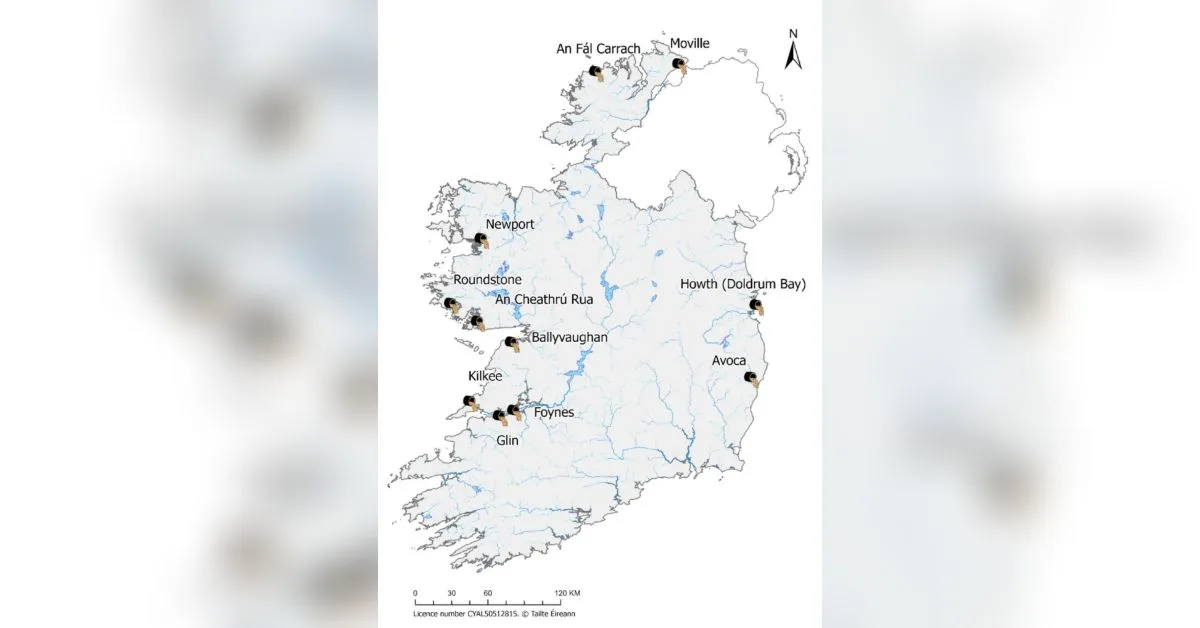
The Environmental Protection Agency (EPA) has warned that poor management of wastewater treatment plants by Uisce Éireann “continues to harm our environment,” after finding that more than half of the plants it licenses failed to meet pollution standards last year.
Its report, Urban Wastewater Treatment in 2025, found that 55% of the 505 licensed plants across Ireland discharged wastewater that did not meet EPA standards. About half the failures were due to deficient infrastructure, and the other half to poor operation and maintenance.
More than 600 breakdowns and mishaps were recorded at treatment plants last year, contaminating bathing waters, rivers and lakes and putting public health at risk. At one point, nine million litres of raw sewage flowed from the Ballybofey-Stranorlar plant in Co Donegal over six days, because Uisce Éireann did not respond promptly. The EPA said the failures ranged from “occasional short-duration breaches to frequent or continuous discharges of poorly treated sewage.”
The EPA said many incidents could have been prevented with better management. “Existing treatment plants are not being properly operated and maintained, undermining the environmental benefits of increased investment in new wastewater infrastructure,” it said. It called on Uisce Éireann to act “without delay,” through better operating practices, staff training and support, and effective preventative maintenance. Untreated wastewater can contain harmful bacteria and viruses that make people sick, and can damage aquatic ecosystems.
Raw sewage is still discharged every day in 11 towns and villages, where public sewers are not connected to a treatment plant. They are Howth, Avoca, Foynes, Glin, Kilkee, Ballyvaughan, Carraroe, Roundstone, Newport, Falcarragh and Moville. Together they release the sewage of a population equivalent of around 15,000 people daily. The EPA said the infrastructure is “not being delivered quickly enough or at the scale required.” Local reports say Moville and Falcarragh are projected to be resolved only in 2030.
There was some progress. Four towns and villages, Rathmullan, Ramelton, Ballycotton and Arklow, stopped discharging raw sewage after being connected to new treatment plants. Whitegate-Aghada came off the untreated list in early 2026.
Treatment plants in 13 large urban areas in six counties, Cavan, Clare, Cork, Donegal, Dublin and Louth, did not meet EU standards. Long-running problems such as Arklow were resolved, but progress was offset by new failures and declining effluent quality at places such as Clonakilty and Swords. The EPA has listed 72 priority areas where action is most urgently needed. Around 60% of these have not yet had work started. EPA programme manager Noel Byrne said slow progress is “prolonging impacts on the environment.”
The EPA has taken 35 successful prosecutions against Uisce Éireann over wastewater discharges, seven of them in the past year. Ireland was also found in breach of the EU Urban Wastewater Treatment Directive at 28 urban areas by the Court of Justice of the European Union in 2019, and the issue is the subject of continuing legal action at EU level.
The utility pointed out that 177 of the 190 large urban areas assessed met EPA standards, a compliance rate of 93%. It said it invested €454.4 million in wastewater services last year, up more than €120 million from €333 million in 2020, and more than €2.5 billion since 2020. New infrastructure has been delivered or is under construction at 41 towns and villages that previously discharged raw sewage, and raw sewage discharges have fallen by more than 85%.
Niall Horgan, wastewater compliance manager, said “we do know there is more to do.” He said many operating problems were linked to the age and condition of plants, some of which were “not designed to meet the demands placed on the network today.” Uisce Éireann runs more than 1,000 treatment plants, 2,300 pumping stations and over 26,000km of sewers.