Industry leaders and haulage representatives are warning that new nationwide fuel protests are becoming “inevitable” as the Irish government prepares to wind down temporary tax relief measures and reinstate higher excise duties.
The representative group Fuels for Ireland has called on ministers to pause the scheduled increase in fuel excise duties, cautioning that stepping back state supports risks pushing diesel forecourt prices past the sensitive psychological threshold of €2 per litre. The warning comes as social media activity surrounding fuel costs mirrors the online mobilization that preceded major protest blockades.
Memories of Spring Gridlock Drive Tensions
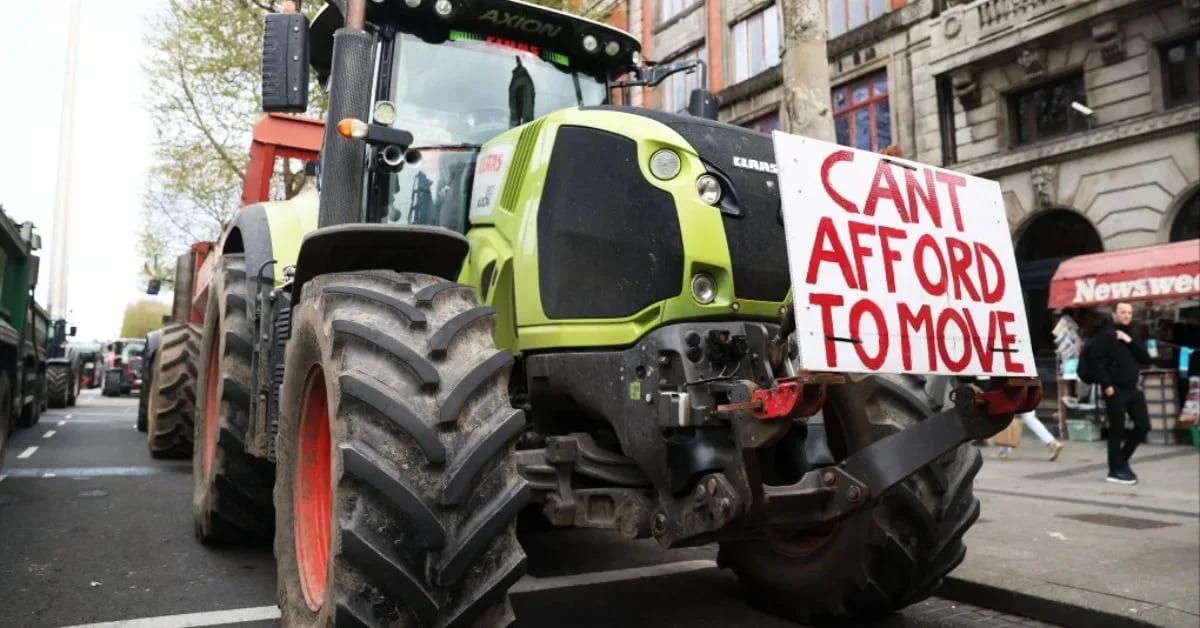
The looming excise restoration comes just months after widespread fuel protests brought major transport corridors and key infrastructure across Ireland to a standstill. Protests involved hauliers, farmers, and independent transport operators blocking major arterial motorways, clogging Dublin city center, and obstructing access points near the Whitegate Oil Refinery in County Cork.
The resulting disruptions forced dry pumps at over a third of service stations nationwide, led to emergency police and military interventions, and ultimately triggered a tense no-confidence vote in the Dáil, which the government narrowly survived. In response to that unrest, the government introduced a €505 million support package alongside temporary excise cuts of 20 cent per litre on diesel and 15 cent per litre on petrol.
However, with those temporary supports phased to expire, fuel suppliers warn that reinstating full taxation during a period of high global energy volatility will instantly reignite public anger.
Industry Demands and Social Media Signals
Kevin McPartlan, CEO of Fuels for Ireland, noted that online commentary and organizer coordination reflect the same patterns observed before the previous blockades. Industry groups are urging politicians to consider recalling the Dáil from summer recess if necessary to formally delay or cancel the planned tax hikes.
Key concerns driving the renewed tension include:
- Rising Commercial Costs: Haulage and logistics firms warn that higher diesel expenses will immediately force up transport charges, compounding inflation across retail supply chains.
- Agricultural Pressures: Farmers operating machinery during peak harvest periods face inflated input costs if agricultural fuel subsidies and excise relief are withdrawn.
- Far-Right Exploitation: Industry representatives have warned that anti-government groups and far-right online organizers are actively attempting to co-opt genuine economic frustration over fuel prices to fuel broader civil discontent.
Balancing Fiscal Policy and Public Discontent
Ministers maintain that emergency tax cuts were intended as temporary measures to cushion consumers from initial global price shocks rather than permanent subsidies. Government figures emphasize that Ireland has provided significant energy support packages relative to European peers.
However, opposition parties and transport advocates argue that abruptly removing support while household budgets remain stretched will hit rural commuters and small businesses hardest. As the deadline for excise duty adjustments approaches, pressure builds on the government to clarify whether it will proceed with tax increases or adjust its strategy to avoid a repeat of widespread transport blockades.