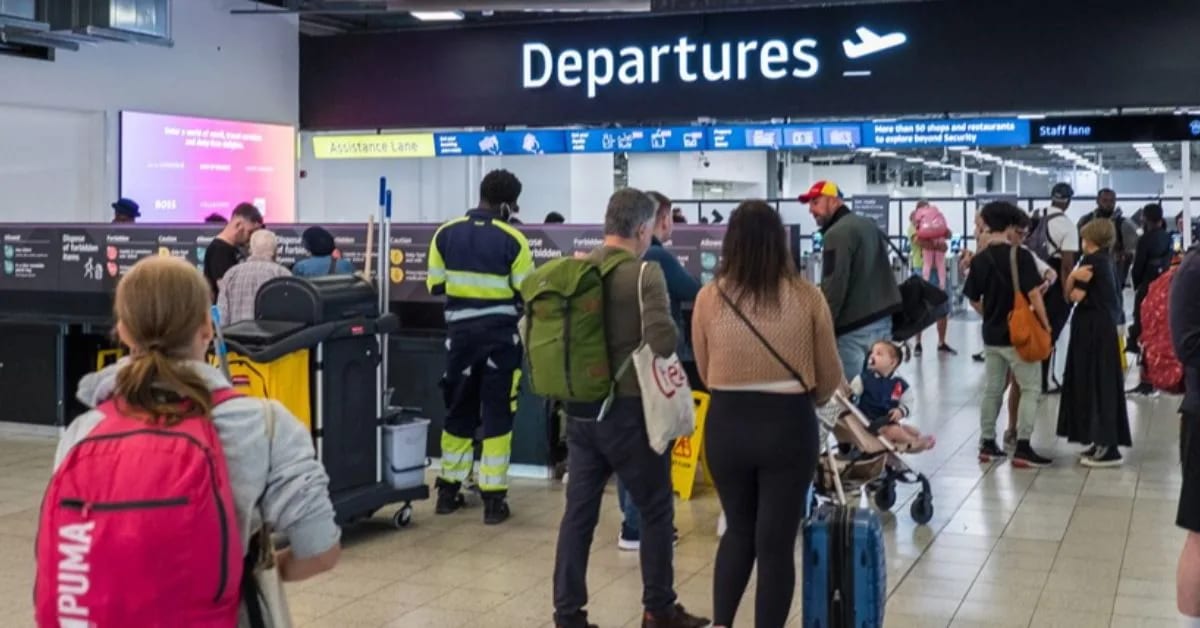
Hundreds of thousands of air passengers face ongoing travel disruption and mass flight cancellations across major UK airports after a critical technical glitch forced Britain’s air traffic control provider to restrict airspace capacity.
The disruption began when National Air Traffic Services (NATS), the agency responsible for air navigation across 15 major UK airports, suffered a major failure in its automated flight-data processing system. Although engineers managed to restore normal system operations four hours later, the sudden shutdown grounded hundreds of aircraft, trapped passengers on airport tarmacs, and triggered widespread cancellations across Europe.
Flight Groundings and Airport Gridlock
The technical failure immediately impacted operations at Britain’s busiest aviation hubs, including London Heathrow, London Gatwick, Manchester, Stansted, Birmingham, and Edinburgh. To maintain safety standards while processing flight plans manually, controllers were forced to restrict departure and arrival rates.
At London Heathrow, aviation authorities temporarily suspended incoming flights late Tuesday as terminals reached capacity and aircraft filled up parking stands. More than 1,000 flights operating to and from the UK were cancelled on Tuesday alone, with nearly 200 additional cancellations extending into Wednesday morning as airlines scrambled to reposition misplaced aircraft and flight crews.
International carriers reported severe operational strain. British Airways confirmed over 100 cancellations and offered free rebooking options, while Ryanair stated that over 150,000 of its passengers experienced severe delays or cancelled flights. Long-haul operators, including Air India, warned that crew-displacement issues would cause lingering delays across international schedules.
Government Intervention and Furious Union Response
In response to the travel collapse, UK Transport Secretary Heidi Alexander summoned NATS Chief Executive Martin Rolfe to an urgent meeting to explain the breakdown and review system resilience. NATS leadership publicly apologized for the disruption, ruling out a cyberattack and reassuring the public that air safety was at no point compromised.
However, the explanation did little to calm industry anger. Executive leadership at Ryanair and Wizz Air called for the immediate resignation or removal of the NATS chief executive. Union representatives and airline bosses pointed out that the failure represents the third major breakdown of British air traffic infrastructure in three years—following catastrophic outages in August 2023 and July 2025—arguing that critical national transport infrastructure remains dangerously fragile.
Passenger Outlook and Recovery Steps
Airports and airlines have warned that while flight navigation systems are fully operational, knock-on delays will continue as airlines clear massive backlogs. Passengers are strongly advised not to travel to airports without verifying that their specific flights are confirmed as operating. The Civil Aviation Authority confirmed it has launched a formal review into NATS’s system performance.