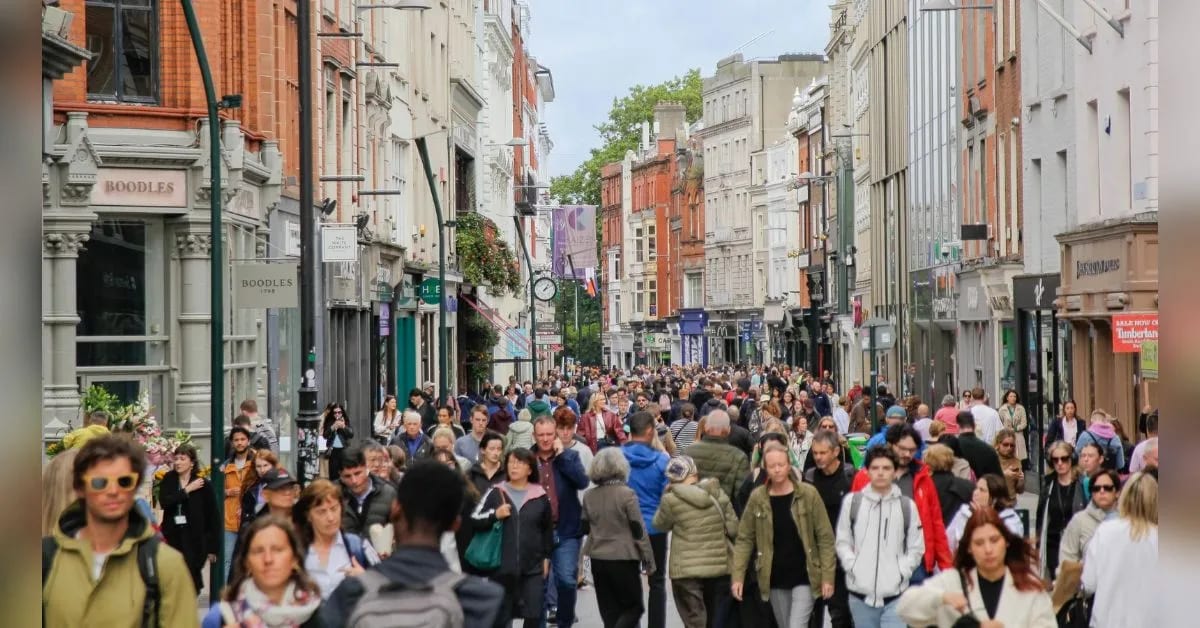
Ireland’s total population has officially surpassed 5.5 million people, driven by continued net inward migration and natural population growth, according to the latest figures published by the Central Statistics Office (CSO). In the 12 months leading to April 2026, the State’s resident population grew by 66,900 people—a 1.2% increase—bringing the total national population to 5,525,600. While the rate of expansion represents a slight moderation compared to recent years, it continues a multi-year period of sustained population growth across the country.
Net Inward Migration Slows Down but Remains Dominant Growth Driver
Net inward migration accounted for approximately 72% of Ireland’s total population growth over the 12-month reference period. An estimated 110,600 immigrants arrived in Ireland during the year, while 62,500 people emigrated abroad. This resulted in an overall positive net migration of 48,100 people, representing a 19% decline from the net migration figure of 59,700 recorded in the previous 12-month period ending April 2025. This marks the fifth consecutive year where total annual immigration into Ireland exceeded 100,000 individuals. Among the 110,600 arriving immigrants, 30,200 were returning Irish citizens, 20,700 were non-Irish EU citizens, 4,300 were UK citizens, and over 55,000 were citizens from non-EU nations. Conversely, of the 62,500 emigrants who departed the State, 35,400 were Irish citizens, leading to a net outward migration of 5,200 Irish nationals. More than half of both immigrants and emigrants were aged between 25 and 44 years.
Aging Demographics and Declining Birth Rates
The CSO data reveals a notable structural shift in Ireland’s internal demographic profile. The number of children aged 0 to 14 years dropped to 992,400, falling below the one-million mark for the first time since 2014. This decline aligns with a long-term drop in births; the number of infants under one year old living in the country stood at 55,000, representing a 27% drop since 2010. In stark contrast, Ireland’s older demographic continues to expand rapidly. The population aged 65 and over rose to 891,100 people, reflecting an increase of 165,000 individuals—or 22.7%—since 2020. Natural population growth (births minus deaths) added 18,800 people to the population, with 54,300 births and 35,400 deaths recorded during the period.
Regional Concentration and Infrastructure Pressures
Geographically, the Greater Dublin Area continues to hold the highest concentration of residents. The population of Dublin reached 1,597,700 people, accounting for 28.9% of the State’s total resident population. This marks an increase from 28.3% recorded in 2020, highlighting the ongoing urban concentration in the capital. Policy analysts and economic commentators noted that while the overall pace of population growth has moderated, adding nearly 67,000 residents in a single year maintains substantial pressure on public infrastructure, public healthcare, school capacity, public transport networks, and residential housing delivery nationwide.