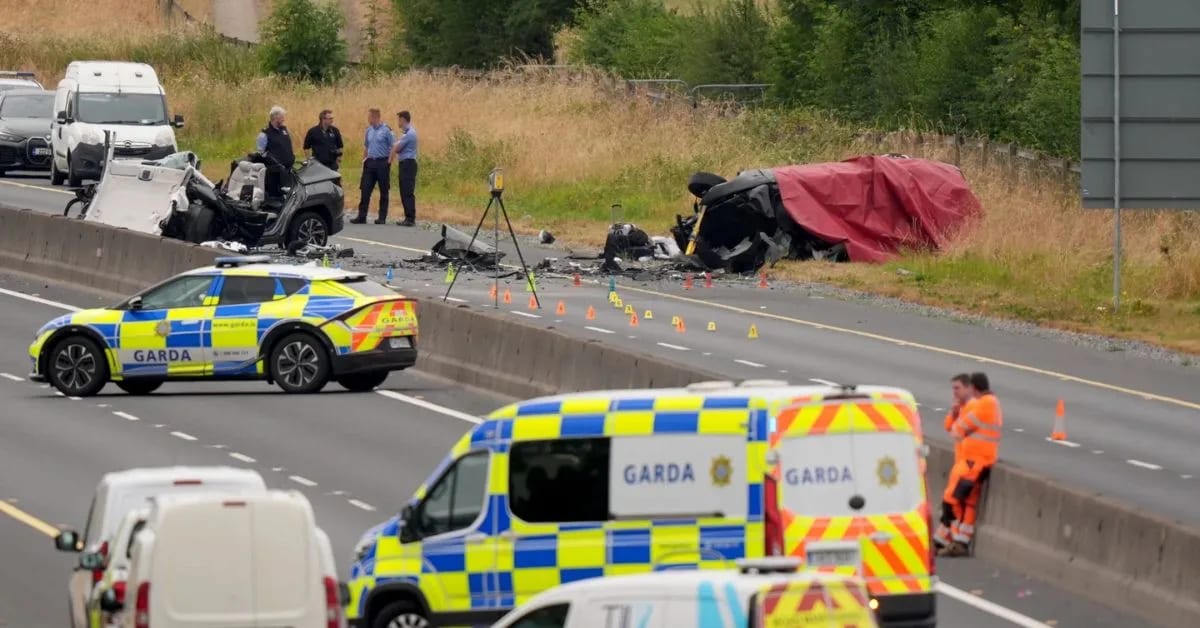
Public scrutiny and official investigations have intensified following a fatal head-on collision on the M9 motorway that resulted in the deaths of five teenage boys. The tragedy has raised serious questions regarding state child protection mechanisms, court bail enforcement, and emergency response procedures.
The five victims—named locally as Joe Carthy, Alex McCarthy, Kamil Pustkowski, Jeremy O’Brien, and Jack Kennedy—died when the vehicle in which they were traveling collided with an oncoming car while driving in the wrong direction on the motorway. The occupants of the second vehicle, which included three women and a seven-year-old child who were traveling toward Dublin Airport, sustained serious injuries and remain under medical treatment.
Bail Conditions and Systemic Questions
Investigations into the circumstances surrounding the crash revealed that the alleged leader of the group was subject to strict court bail conditions at the time of the incident. These legal restrictions included a strict curfew, regular check-in requirements, and a clear geographical ban prohibiting him from traveling outside his home county.
The revelation that the youth was able to leave his designated county and travel onto a major motorway network while on bail has sparked intense debate over how compliance with court-imposed bail conditions is monitored and enforced by law enforcement agencies. Legal analysts and community representatives are raising concerns regarding the effectiveness of non-custodial bail measures for repeat juvenile offenders.
State Care Oversight and Tusla Investigation
Further disclosures have drawn attention to the child protection system. Tusla, Ireland’s Child and Family Agency, confirmed that one of the teenagers killed in the crash was under state care at the time of the incident. Additionally, the agency acknowledged that two of the other youths involved had prior contact with state social services.
In response to these findings, Tusla launched a comprehensive national review to examine the supervision, support, and care plans in place for the young people prior to the tragedy. Child welfare advocates are urging a thorough review of residential care supervision and night-time monitoring protocols to understand how vulnerable teenagers under state guidance can engage in dangerous high-risk behaviors without immediate intervention.
Law Enforcement Responses and Policy Changes
The incident has also prompted immediate discussions within law enforcement. Reports indicate that frontline officers had encountered the vehicle shortly before it entered the motorway traveling against oncoming traffic. The Garda Síochána Ombudsman Commission (GSOC) has opened an independent investigation to assess all interactions between police units and the vehicle prior to the crash.
Simultaneously, the Minister for Justice announced that specialized pursuit training for Garda officers will be formally introduced. The Garda Representative Association emphasized the necessity of equipping officers with dedicated tactical training to handle high-risk vehicular pursuits safely.
As multi-agency reviews continue, the tragedy has forced a broader national conversation regarding the alignment between justice enforcement, child welfare systems, and public safety measures designed to prevent youth crime on public roadways.