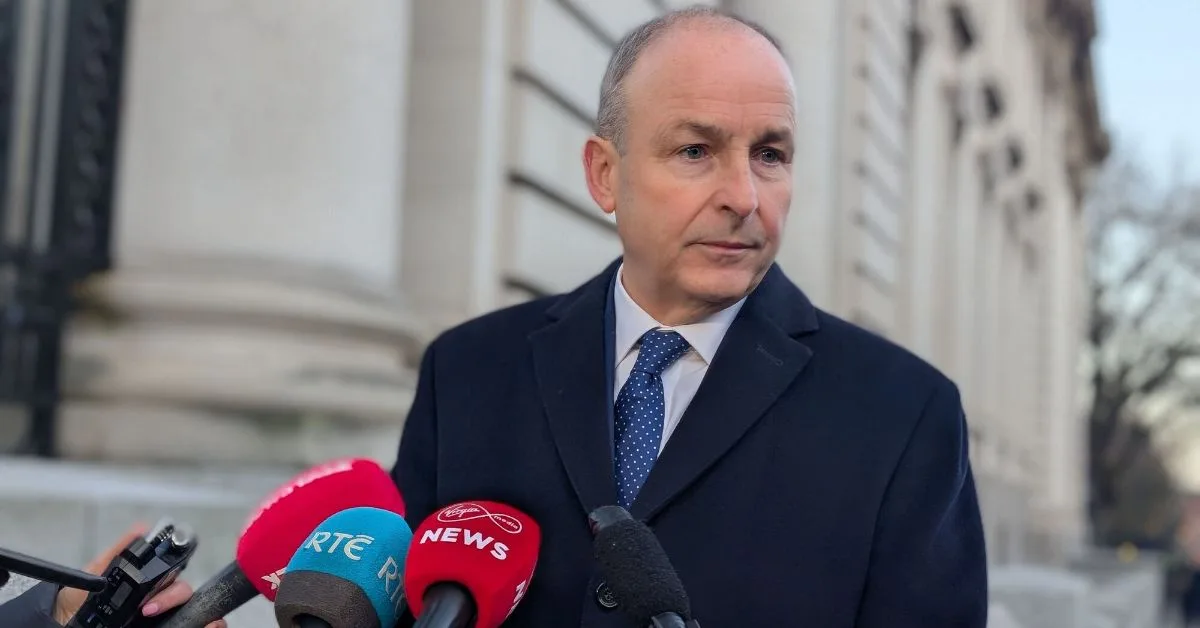
Taoiseach Micheál Martin has suggested the Government may show leniency toward people already working their way through the citizenship application system before Ireland’s residency requirements are tightened, appearing to contradict recent comments made by his own Justice Minister.
Earlier this month, the Cabinet approved sweeping new rules for Irish citizenship, contained in the Irish Nationality and Citizenship (Amendment) Bill 2026. The most significant change increases the “reckonable residence” period required for naturalisation from five years to eight, made up of two years of continuous residence immediately before applying, plus six years within the previous ten. Other changes include a new language test in English, Irish or Irish Sign Language, a civics test on Irish society and institutions, a requirement to prove financial self-sufficiency above a minimum income set by the minister, a two-year bar on receiving social welfare before applying, tighter rules for spouses of Irish citizens (rising from three years to five), and a new power allowing the minister to revoke citizenship on public order or national security grounds.
The Government has described the changes as reflecting a philosophy that citizenship is “an earned privilege,” the result of sustained lawful residence, economic self-sufficiency and social integration, rather than simply the passage of time. Justice Minister Jim O’Callaghan has stressed the reforms are “not a judgment on the contribution of migrants,” but says the rules are necessary to ensure new citizens have a demonstrated, durable connection to the country.
However, the plan to apply the new rules retrospectively, even to migrants who have lived in Ireland for years and are close to qualifying under the current system, has drawn strong criticism. Many aspiring citizens told the Irish Examiner in recent weeks that a transition period was needed, so that those nearing the existing five-year mark would not suddenly face another three-year wait. Government sources had previously indicated there would be no such lead-in time, and that anyone without a submitted application by the time the new law commences would have to wait the full eight years.
Speaking in New York ahead of his address to the United Nations General Assembly, Mr Martin was asked directly about the fairness of the change for people close to becoming eligible. He said Mr O’Callaghan would bring further proposals back to Cabinet, and that the Government would ensure the process was fair. “Aspects such as the one you’ve just mentioned will be looked at in terms of people who are already in the country,” the Taoiseach said. “But I will wait for the ministers to come back. We will be fair.”
Mr Martin drew a distinction between different groups of applicants. He noted that some people going through the asylum process, delayed by slow processing and appeals, were only able to apply for citizenship after five years once granted permission to remain. But he acknowledged this reasoning did not apply to everyone affected, pointing to people who came to Ireland on work permits and have “played by the rules as they exist to date.” He said these were issues that would fall for further discussion, and that the minister was still working through the details before reporting back.
His comments stand in contrast to what Mr O’Callaghan said just weeks earlier, when he acknowledged the change would negatively affect people who are close to qualifying. “If you have been here for four years and 10 months by the time the laws are changed and commenced, it will affect you,” the minister said at the time. “That’s the truth of the matter. But legislation will always, I suppose, affect and discriminate against people on the edges.”
The new rules are expected to be signed into law before Christmas. More than 13,000 people are already waiting over a year for a decision on existing citizenship applications, adding further pressure on the Government to clarify how the transition will work.