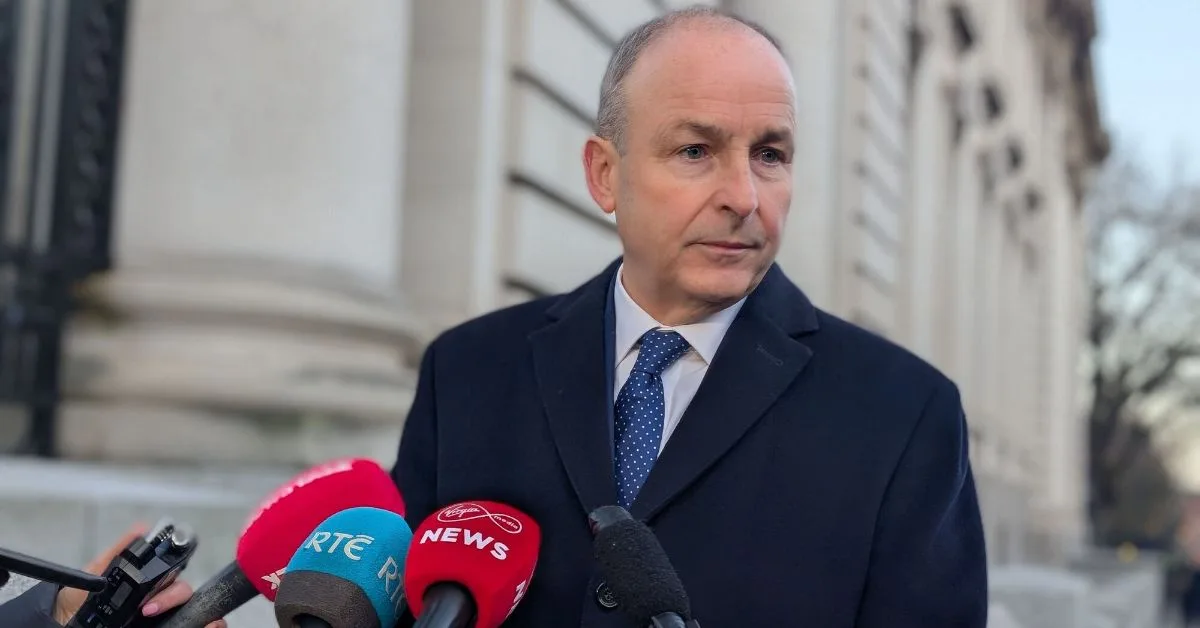
Any new public sector pay deal will have to include productivity measures, Taoiseach Micheál Martin has said, as formal talks with trade unions open at the Workplace Relations Commission (WRC) today.
Mr Martin delivered the message on Sunday, a day after both sides agreed a framework for the negotiations. That agreement led unions to suspend a second 24-hour strike that had been planned for this Wednesday, October 21. It followed a strike last week in which more than 300,000 public sector workers took part. Work-to-rule action by unions is continuing.
Speaking at the Fianna Fáil Wolfe Tone commemoration at Bodenstown, Co Kildare, Mr Martin rejected claims by Ryanair chief executive Michael O’Leary that he would “buckle” or “roll over” to the unions. “Obviously there has to be value for money, there has to be productivity and all of that, and that has always been our position,” he said.
The Taoiseach declined to say whether the €1.2 billion set aside for pay in last month’s Budget could be raised using a separate €1.6 billion contingency fund. Some reports suggested another €400 million could be added. “We’re not going to go into what may transpire over the course of the negotiations… Nothing is decided, no precise figures have even been mentioned yet,” he said. Unions have said the full cost of a deal could be around €2 billion.
Fórsa general secretary Kevin Callinan, who will lead the union side, said the figures floated in Sunday’s papers appeared “deliberately used to try to get people to forget that the Government was talking about €2 billion a few weeks ago.”
The order of talks had been a major sticking point. After a day of meetings on Saturday, chaired by WRC chairman Kevin Foley, a joint statement from a Government-appointed group led by Mr Foley said the discussions “should commence with pay related matters.” These include the unions’ claims about the effect of the cost of living between 2021 and 2025, this year, and for the length of any agreement. The group said there is a “need to rebuild trust and confidence in industrial relations in the public sector by addressing commitments made in the context of the previous agreement.”
Unions say workers face a shortfall of between 5% and 7% on the pay increases most received since 2021, once inflation is taken into account. They want measures to address that gap.
Mr Martin would not be drawn on whether he would back a smaller percentage rise for higher-paid public servants and a larger one for lower-paid workers, rather than an across-the-board increase. “I’m open to an agreement that is affordable, that can advance productivity within the public service, that would look after low-paid workers,” he said, adding that it was not for him to set out preferences on the shape of a deal before talks start.
Public Expenditure Minister Jack Chambers welcomed Saturday’s agreement on how to proceed. Mr Callinan said Mr Chambers told him the Government had “listened to the people on picket lines last Wednesday.” “We’ll now test whether they have understood and back it up in practice,” he said.
The Government side will be represented by officials from the Department of Public Expenditure. Unions have had a strained relationship with the department, so the process could prove difficult. Senior Government sources expect tough negotiations and hope to finish within weeks, but are preparing for a longer process.